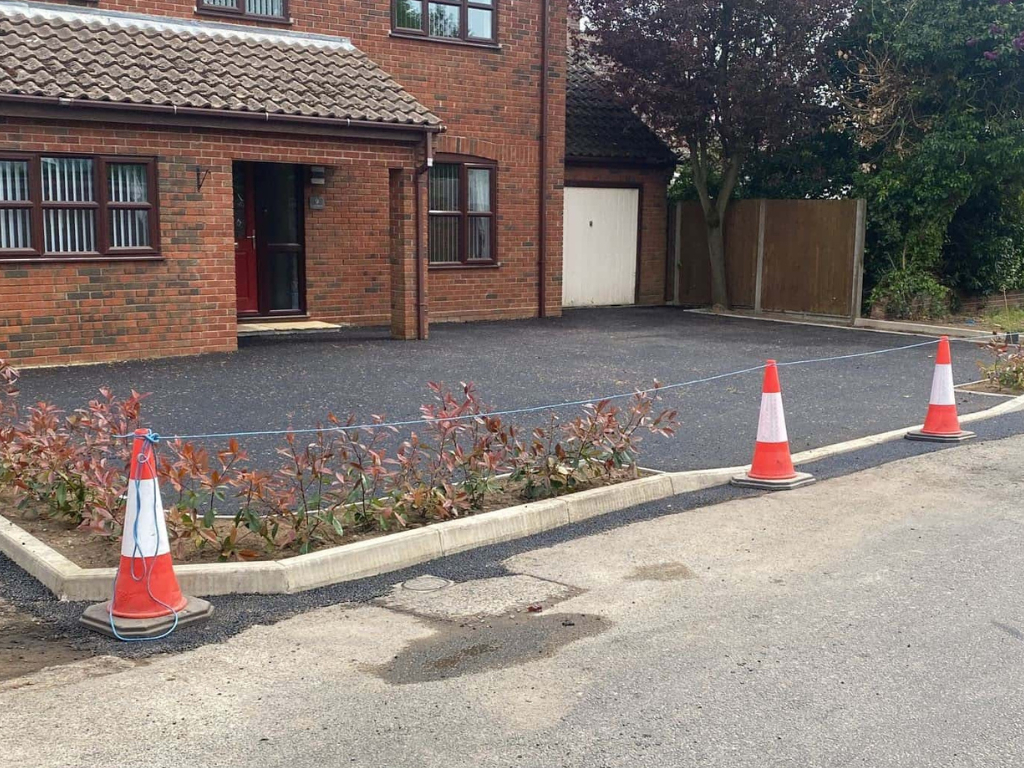
Is Tar & Chip a Good Choice for Long Farm Roads and Agricultural Access Routes?
Long farm roads and agricultural access routes need a surface capable of handling regular vehicle movements while remaining practical across an extensive area. Mud, loose stone, standing water and surface erosion can make untreated tracks increasingly difficult to use, particularly during wet conditions.
Tar and chip can be a suitable option for agricultural routes in Thetford, Suffolk. However, its performance depends on the condition of the underlying base, effective drainage and whether the surface construction is appropriate for the vehicles that will use it.
Understanding Tar and Chip for Agricultural Access
A tar and chip surface is created by applying a hot bituminous binder before covering it with selected stone aggregate. The aggregate is rolled into the binder to produce a textured, hard-wearing finish.
Unlike loose gravel, the stone is held in place by the binder. This reduces migration, rutting and the amount of loose material pushed towards the edges by passing vehicles. Its textured appearance also allows it to sit naturally within agricultural surroundings.
Why It Can Suit Long Farm Roads
Tar and chip can cover lengthy access routes efficiently when the existing foundation is stable and correctly prepared. It creates a more consistent running surface than an untreated or loose-stone track, helping vehicles travel along the route without encountering deep ruts, soft patches or displaced aggregate.
Its textured finish can provide useful traction for cars, vans and agricultural vehicles. It also avoids the constant movement associated with loose gravel, which can become concentrated in some areas while leaving others exposed.
For routes connecting fields, buildings, yards and entrances, this can create a clearer and more dependable access arrangement.
The Existing Base Must Be Suitable
The performance of a tar and chip surface depends heavily on what lies beneath it. The new treatment is not designed to compensate for a weak, deeply rutted or waterlogged foundation.
Before installation, the existing route should be checked for:
- Soft or unstable ground
- Deep wheel ruts
- Potholes and sunken sections
- Loose or contaminated material
- Areas where water regularly collects
- Insufficient depth within the sub-base
- Poorly supported edges
- Excessive vegetation growth
Weak sections may need to be excavated and rebuilt before the surface is applied. Grading and compaction can then create the correct profile and provide consistent support along the route.
Drainage Is Essential on Long Routes
Water is a major cause of failure on agricultural access roads. If it remains on the surface or penetrates the supporting layers, the base can soften and move under traffic. This may eventually cause depressions, potholes and surface separation.
A well-prepared route should direct rainfall away from its running surface. The required solution may include a suitable crossfall, camber, drainage channels or attention to adjoining ground levels.
Drainage should be planned across the entire route rather than only around its entrance. Even one poorly drained section can become a recurring weak point.
Vehicle Type and Movement Patterns Matter
Agricultural access routes may be used by a mixture of vehicles with very different weights and turning requirements. Cars and light commercial vehicles place different demands on a surface from loaded trailers, tractors and larger machinery.
Particular attention should be given to:
- Areas used by heavy vehicles
- Tight corners and turning points
- Gateways where vehicles stop and manoeuvre
- Steep gradients
- Loading or storage areas
- Sections exposed to frequent braking
- Narrow edges that may be overrun
Turning wheels can place significant sideways pressure on the surface. High-use junctions and manoeuvring areas may therefore need a different construction detail or additional reinforcement.
Tar and Chip Compared With Loose Tracks
A loose aggregate track can provide basic access, but regular traffic may push the stone into ridges, wheel paths and surrounding ground. Grading may be required to restore an even surface, while additional stone may be needed where material has moved.
Tar and chip binds the surface aggregate together, creating a firmer and more uniform route. It can reduce loose material, improve driving conditions and give the access road a defined finish.
It is still important to maintain drainage and address local damage when it appears. No surface will remain reliable if water is allowed to undermine its foundation.
Preparation Determines the Finished Result
Successful installation begins with an accurate assessment of the entire route. The ground must be stable, the levels must support drainage and the surface must be sufficiently compacted before the binder and aggregate are applied.
Applying tar and chip directly over an unsuitable track may leave existing problems concealed rather than corrected. Ruts, movement and drainage defects can soon become visible through the new surface.
Professional preparation ensures that the finished layer is supported evenly from the entrance to the furthest section of the access road.
When Another Surface May Be More Appropriate
Tar and chip is not automatically the best choice for every agricultural route. A different surface construction may be more suitable where there are extremely heavy or concentrated loads, frequent sharp turning movements or substantial weaknesses within the existing ground.
The route’s use, vehicle frequency, drainage and current condition should all be assessed before a recommendation is made. This provides a more reliable basis for choosing the correct finish than selecting a material solely by appearance.
Conclusion
Tar and chip can be a practical choice for long farm roads and agricultural access routes when installed over a strong, well-drained base. It creates a textured and dependable surface, holds aggregate more securely than a loose track and can improve access across an agricultural property.
Thetford Driveway Solutions provides professional tar and chip surfacing for properties in Thetford, Suffolk. If you are considering improvements to a farm road or agricultural access route, contact us to arrange an assessment and discuss the most suitable approach for the site.
Call us on: 01842 778 593
Click here to find out more about Thetford Driveway Solutions
Click here to complete our contact form and see how we can help with your driveway needs.