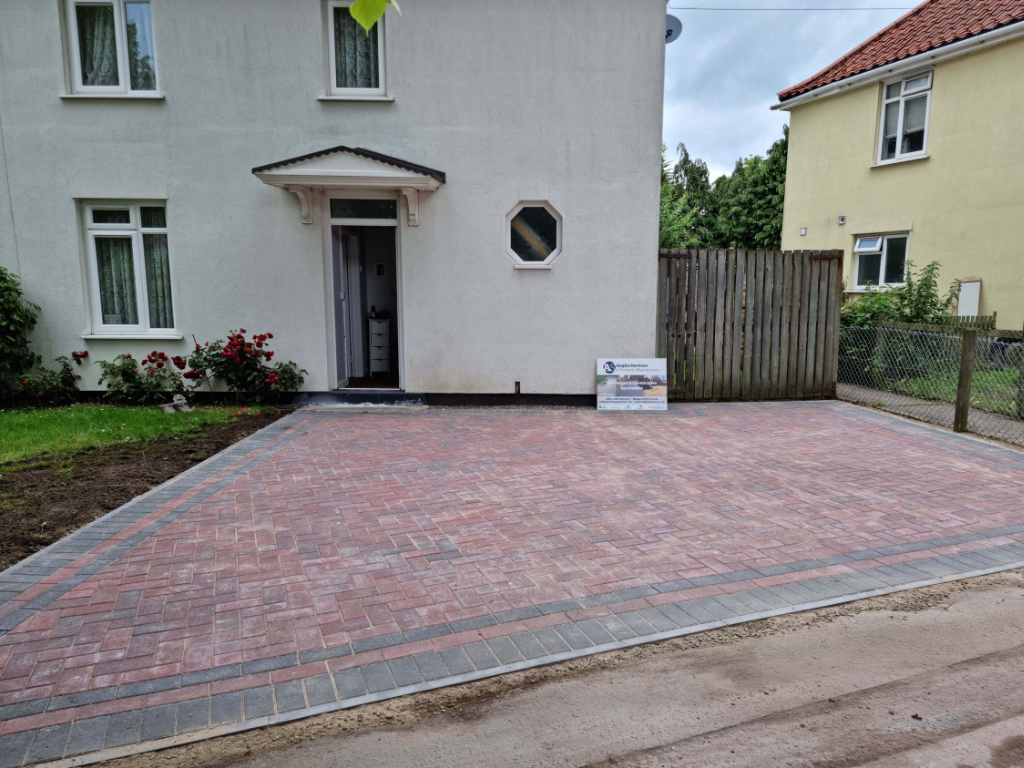
Can an Existing Block Paved Patio Be Extended?
A patio that once provided plenty of outdoor space can begin to feel limited as the way a garden is used changes. Perhaps additional seating is needed, a larger dining area would be useful, or the existing patio simply no longer provides enough practical space for everyday outdoor living. If the current surface is block paved and remains in reasonable condition, homeowners may naturally wonder whether it can be extended rather than completely replaced.
In many situations, an existing block paved patio can be extended successfully. However, achieving a natural-looking and durable result involves considerably more than laying additional blocks alongside the existing surface. Ground preparation, levels, drainage, edging and the condition of the original patio all need to be considered.
For homeowners in Thetford, Suffolk, Thetford Driveway Solutions can assess an existing block paved patio and determine the most appropriate way to create additional usable outdoor space.
Why Extend an Existing Patio?
Gardens often need to adapt as household requirements change.
A relatively small patio may initially have been suitable for a table and several chairs but become restrictive once more outdoor furniture or other garden features are introduced.
Extending a patio can provide additional space for:
- Outdoor dining
- Garden furniture
- Seating areas
- Barbecues
- Planters
- Access around furniture
- Connecting different parts of the garden
The objective should be to create genuinely useful additional space rather than simply increasing the amount of paving.
Start by Assessing the Existing Patio
The original paving needs to provide a suitable starting point
Before planning an extension, it is important to establish what condition the current patio is in.
If the existing paving remains stable, reasonably level and well supported, extending from it may be relatively straightforward.
Signs that the original patio may require attention include:
- Sunken blocks
- Widespread movement
- Uneven areas
- Loose edging
- Persistent water collection
- Open or deteriorating joints
- Sections that have repeatedly required adjustment
Extending a patio without considering existing defects can result in a larger surface that still contains the original problems.
The New Section Needs Proper Ground Preparation
One of the most important aspects of extending block paving is ensuring that the additional section receives appropriate groundwork.
The new paving should not simply be laid onto garden soil beside the existing patio.
The ground needs to be prepared to create suitable support for the finished surface. The exact preparation depends on the site, but establishing a stable foundation is essential for reducing the likelihood of movement and settlement.
If the extension is constructed differently from the original patio, the two sections may behave differently over time.
Professional preparation helps the complete area function as one usable surface.
Matching the Existing Patio Levels Is Essential
A patio extension should feel like part of the original area
The finished height of the new paving needs to work with the existing patio.
Poorly planned levels can create:
- Noticeable steps
- Awkward transitions
- Low areas
- Trip points
- Poor water movement
- An obviously separate extension
Careful setting out allows the new paving to meet the existing surface cleanly.
Where the original patio has developed unevenness, it may also be worth addressing affected sections before determining the final level of the extension.
Can the Existing Block Paving Be Matched?
Matching the paving is often one of the first questions homeowners ask.
If the same block style remains available, the extension can potentially be designed to continue the existing pattern.
However, paving that has been outside for several years will naturally have experienced weathering and regular use. Newly installed blocks can therefore appear slightly different even when they are technically the same product.
Where an exact visual match is difficult, there are other ways to create an intentional design.
For example, a contrasting border or clearly defined transition can make the new area look deliberately incorporated rather than unsuccessfully matched.
The Laying Pattern Should Be Considered
Block paving provides considerable design flexibility because individual units can be arranged in different patterns.
When extending an existing patio, the installer needs to determine whether the original laying pattern should continue directly into the new section.
A consistent pattern can create a seamless appearance where suitable matching blocks are available.
Alternatively, changing the pattern or introducing a border can help distinguish the extension while still making the overall patio feel coordinated.
The best approach depends on the original design and the shape of the additional area.
Drainage Must Be Planned Across the Complete Patio
Increasing the paved area changes how the garden handles water
A larger patio creates a larger hard surface, making drainage an important part of the extension design.
The new section should not create low points where rainwater regularly collects.
Attention needs to be given to:
- Existing patio falls
- New finished levels
- Direction of surface water
- Connections with surrounding garden areas
- Drainage features where required
- Transitions between old and new paving
Drainage should be considered during the planning stage rather than after the additional paving has been installed.
Existing Drainage Problems Should Be Addressed First
If the original patio already suffers from standing water, extending it without investigating the problem can make the situation more difficult.
Water collecting in one area can indicate issues with levels, settlement or the way the patio was originally constructed.
Before adding more paving, it is sensible to establish why the water is accumulating.
Depending on the condition of the existing surface, sections may need adjustment as part of the wider patio work.
This provides an opportunity to improve the complete area rather than simply adding more paving around an existing defect.
Edge Restraints Are Important
The outer edges of block paving help keep the individual units contained.
When a patio is extended, part of the original perimeter may effectively become an internal section of the new surface, while a new outer boundary is created.
Secure edging helps:
- Maintain block alignment
- Preserve the paving pattern
- Reduce lateral movement
- Define the new patio shape
- Create a neat transition to surrounding garden areas
Good edge construction is particularly important where the new patio meets lawns, planting beds or other softer surfaces.
Can a Patio Be Extended in Only One Direction?
Yes. There is no requirement to enlarge every side of an existing patio.
An extension can be designed around the available garden space and the reason additional paving is required.
For example, the patio might be extended specifically to create:
- A wider dining area
- Additional seating space
- A connection to a garden path
- More room around existing furniture
- A better-shaped entertaining area
This flexibility is one of the advantages of block paving.
The design can respond to the garden rather than simply creating a larger version of the original rectangle.
An Extension Can Improve an Awkward Patio Shape
Some patios provide sufficient overall area but use the available space inefficiently.
A narrow section or awkward corner can make positioning furniture difficult.
Adding paving strategically can transform the layout.
Rather than focusing solely on square metres, good patio planning considers how people will actually move through and use the space.
A relatively modest extension in the right position can sometimes make a greater practical difference than adding a large amount of paving in an inconvenient area.
Consider Furniture Before Deciding the New Size
Planning around real use creates a more practical patio
Before deciding how far to extend the patio, it can be helpful to consider the furniture and activities the area needs to accommodate.
Allowing space only for the footprint of a table can still leave the finished patio feeling cramped once chairs are pulled out and people need to move around them.
Think about:
- Table dimensions
- Chair movement
- Walking routes
- Outdoor seating
- Planters
- Barbecue positioning
- Access into the garden
Planning around actual use can help ensure the extension solves the reason the existing patio feels too small.
The Existing Paving Can Sometimes Be Reconfigured
Extending a block paved patio does not always mean leaving every existing block exactly where it is.
Because block paving consists of individual units, there may be opportunities to lift and reposition selected areas as part of the extension.
This can be useful when:
- Creating a new border
- Adjusting the laying pattern
- Improving transitions
- Correcting localised unevenness
- Integrating old and new sections
Whether this is worthwhile depends on the condition and design of the existing paving.
Localised Settlement Should Be Repaired Before Extending
If a small part of the original patio has sunk, it does not necessarily mean the entire surface needs replacing.
Block paving has the advantage that individual sections can often be lifted so that the supporting layers underneath can be assessed and corrected before the blocks are reinstated.
Addressing these areas before extending the patio helps create a more consistent finished surface.
Simply using the existing uneven levels as the reference for the new section could reproduce those problems across the extension.
Should You Extend or Replace the Whole Patio?
Extending is often worth considering when the existing block paving remains in good condition and the main issue is simply a lack of space.
More extensive work may be appropriate where:
- Large areas have become uneven
- Numerous sections are sinking
- The original layout is no longer practical
- Drainage requires significant improvement
- The existing paving is extensively deteriorated
- A completely different patio design is wanted
There is little reason to remove a sound patio unnecessarily. Equally, adding new paving to a badly deteriorated surface may not provide the best overall result.
An assessment can help determine which approach makes sense for the existing condition.
A Patio Extension Can Improve the Flow of the Garden
A well-designed patio should connect comfortably with the rest of the outdoor space.
Extending the surface can improve movement between the property, seating areas, lawn and other garden features.
For example, additional paving can remove narrow pinch points or provide clearer walking space around furniture.
This can make the patio feel less like an isolated hard-surfaced area and more like an integrated part of the garden.
Block Paving Offers Useful Design Flexibility
One reason block paving works particularly well for patio extensions is the adaptability of individual paving units.
The extension can incorporate:
- Straight boundaries
- Curved sections
- Contrasting borders
- Changes in laying pattern
- Connections to paths
- Defined seating areas
This flexibility allows the additional paving to respond to the shape of the garden and existing landscaping.
A thoughtfully designed extension can therefore improve both practicality and appearance.
Why Professional Installation Matters
Extending an existing patio involves joining new construction to an established surface.
Achieving a dependable result requires attention to more than the visible paving.
Professional installation considers:
- Existing patio condition
- Ground preparation
- Foundation stability
- Finished levels
- Drainage
- Block alignment
- Edge restraints
- Jointing
- Integration between existing and new paving
These details determine whether the extension feels like a natural part of the patio rather than an addition that has simply been placed beside it.
Professional Block Paved Patio Extensions in Thetford
At Thetford Driveway Solutions, we provide professional driveway and paving services for properties throughout Thetford, Suffolk.
If your existing block paved patio remains serviceable but no longer provides enough space, we can assess whether it can be extended effectively. We consider the condition of the original paving, available garden space, levels, drainage and how the completed patio needs to function.
Where appropriate, existing paving can be retained while a professionally prepared extension creates the additional outdoor space required.
Conclusion
An existing block paved patio can often be extended without completely replacing the original surface. Where the current paving remains stable and well constructed, additional block paving can create more room for seating, dining, entertaining and general outdoor use.
Successful patio extension depends on careful integration between the old and new areas. Ground preparation, matching levels, drainage, edge support and the condition of the existing paving all need to be considered. Where an exact block match is difficult, thoughtful use of borders or design changes can also help create an attractive, intentional finish.
If your block paved patio in Thetford, Suffolk has become too small for the way you use your garden, contact Thetford Driveway Solutions. We can assess the existing paving and create an appropriately planned extension that provides additional practical outdoor space while complementing the original patio.
Call us on: 01842 778 593
Click here to find out more about Thetford Driveway Solutions
Click here to complete our contact form and see how we can help with your driveway needs.